Tuesday, April 19, 2016

Down Under!

we touched down in Melbourne on 27 March, Easter and T's 65th birthday. Pumped!

Within two hours of landing, a second cousin of T's, whom he'd never met, arrived at our hotel, and she and her husband whisked us off to show us the town.  First stop, their charming home for a "simple" lunch that, to us, was very special indeed:  lovely cheeses, smoked salmon, avocados, great bread,  washed down with Australian red wine--every item a treat for us Penangites.    Then they drove us around Melbourne, through downtown, around the Australian Grand Prix track (--the many viewing stands were still up), and past museums and other buildings they thought we might like to explore on our own the next day.

Indeed, the next day we took the tram to downtown, and started with the Art Museum, which we thought we would just have quick look at.  T's cousin had told us of the stained glass ceiling in the back that sounded like worth a look.  Two + hours later we exited....  Here is the ceiling, and T getting a good look


Many cool things to see


We paused to watch and listen to a pond full of ceramic ware floating along, making chime-like sounds as they bumped into each other 
While Tom went in to to see Whistler's Mother, K  spent ages watching a video of two people placing rubber band after rubber band around a watermelon.  Yes, she did get the satisfaction of watching it burst.  Art!


On to downtown proper, across the Yarra River
and the cricket stadium
Trams are free in the CBD (= central business district)
Melbourne mixes charming old (late 1800s - 1920s) buildings with interesting tall new structures, really well.  Odd bits of art are seen here and there, even along the highways.  We found many other reasons to love the place. Sensible public transit.  A vibrant downtown, with many small shops that are open and full of customers.  How is this possible?  A thriving middle class, thanks to a livable minimum wage.  What a concept.  We heard of a cleaner earning US$19 an hour.  You don't routinely tip in restaurants because WAITERS EARN ENOUGH TO LIVE ON.  

Without having a clue what it meant, we had booked an Art Series hotel, the Blackman.  Great reviews, and we will certainly be adding ours to that.  It was very convenient, for one thing, just a few tram stops from the CBD. Super comfortable--studios complete with dishwasher (a real novelty for us) and a small balcony. Classy--stuffed with the art of Charles Blackman.  And outstanding customer service--they gave us a bottle of prosecco with an ice bucket for T's birthday. Here is T in the hallway, and a rack of art publications in our room.

On the advice of T's cousin we visited the Melbourne State Library, a gorgeous old building. Up on the fourth floor T runs into students from Uplands! What good students, in the library!
There is a university nearby, and many of their students using the library.

We learn that Ned Kelly's armor is here and have to have a look.  A legendary outlaw in the 1870s, he and his gang robbed a lot of banks before all were killed by police save Ned, whose homemade armor apparently offered some immediate protection.  He was arrested and hung in the Melbourne Gaol in 1880.
Here is a famous Melbourne's landmark, Flinders St. train station.
Every town needs a Lolly shop, no? And a discount one, all the better.

Downtown Melbourne has several historic malls, called arcades.  we stopped for drinking chocolate in this one. Oh yes.
We hopped a tram to the once seedy beach town of St. Kilda. 
We walked out to the end of the long pier and were rewarded by finding two of the 1,000 little penguins said to live there.  It was quite windy and they were snuggled in between some rocks.

View of Melbourne from St. Kilda

The next day we picked up a car and headed south to the Great Ocean Road.  A good and fitting name. The first town one passes through is Torquay, surfing capital and birthplace of both Quicksilver and Ripcurl brands,

Along the way a slight detour inland to the Kennet River, to see if we could spot some koalas. Scanning the trees as we drove yielded nothing, but when we pulled over so T could find a bush, after some moments he spotted this guy right in front.
and this one. 

Back to the Great Ocean road, time for lunch!  Our first Aussie fish and chips, right by the sea. Perfect!

this fish is Blue Grenadier
The Great Ocean Road is 250 kilometers (155 miles) of national heritage two lane highway along the southern coast of Victoria--that's southeast Australia. Built by soldiers returned from World War I. A major tourist attraction, understandably.

Roughly halfway along are the "12 Apostles," limestone stacks that actually number only 9. One apostle:

Two apostles
More


Such different trees!  We have no idea what any of them are. One type is reminiscent of Lebanese cedars.

We stopped for the night in Warrnambool, a pleasant small town not far from the end of the road, to to speak. We stayed in the Hotel Warrnambool, very conveniently situated above a really nice pub.

The next day we turned north, heading for Grampians National Park.  New road signs appear:
Unfortunately the first one we see is dead, by the roadside. Three of those before we reach our destination.

Our first glimpse of the Grampians mountains
and nearer
And a live one--don't hit him/her!


Or else? 
We reach Halls Gap, where we spend two nights.  Our motel backs up to a large field full of...kangaroos!

and cockatoos!  The fence divides our small terrace and the field.
The kangaroos raised suddenly in alert mode, then moved quickly off to one side. Off in the distance we spotted the reason: an emu.  
We did several short hikes to various viewpoints in the park.


Well, some of us find this interesting--kangaroo poo:

Much of the area had suffered forest fires. Fascinating how the vegetation works with local conditions: the very cool looking plant (with cool looking homo sapien, below) called kangaroo tail only germinates after being burned.  Apparently they can live up to 600 years!

Above, the burned stump of a kangaroo tail. Presumably it will sprout.

One hike was to a waterfall, that in this dry season had little water but was still beautiful.

We left the Grampians to head for the small town of Kaniva, to meet another of Tom's second cousins. Kaniva is, well, pretty much in the middle of nowhere, halfway between Melbourne and Adelaide on the well traveled Western Highway.  Kaniva has a strong community, which really makes the place stand out,  Apparently the Garden Club waged a beautification campaign that eventually won everyone over.  There are trees and green spaces that might not have been, and bits of art. Evidence of a sheep painting contest are dotted about the town.


When an oil company announced that it would be closing the
 only gas station in town (leaving the nearest station 38 km/23 miles away), locals came up with a plan to buy and operate it--people bought shares in the venture and it is now a thriving community fixture.  We had breakfast inside and were happy to pay 3 cents more a liter for gas at this community-run station. The train station was not so lucky. For the station to remain open, not only to passengers but to freight cars transporting harvested grains, trains a minimum of 25 carriages long are needed, more than Kaniva can produce.
T's cousin Barry gave us a great tour of both Kaniva and the homestead where T's grandfather lived.  We saw a sheep-shearing shed and learned of the many different crops that large farms in Australia grow, in rotation and depending on the amount of rainfall.  Canola and lentils are two, as well as clover, which brings nitrogen back into the soil and provides feed for the sheep.  Australia is also the second largest producer of almonds after California.  Barry alluded to how much of a challenge farming is.  He showed us an area where someone from Qatar (or maybe the government) had just purchased 120,000 acres.


Barry showed us the church where their family had gone for generations, and where T's grandfather once preached (in an earlier building).
With great thanks to second cousin #2, we moved on the Adelaide.   Along the way, K made T stop to enshrine on this document for all to see, the Giant Koala
we didn't get out of the car.

Adelaide has a different vibe than Melbourne.  It shares wonderful features like free downtown transport and many green spaces, but doesn't have the artsy vibe of Melbourne.  The new and old are not blended so well, and the new just isn't as appealing.  Adelaide does have FREE WIFI downtown though, which is amazing.
We went to the South Australia Museum for a little culture. Your author felt compelled to take the following two shots:
Boomerangs


both stuffed 

Besides shopping and culture, we made time for a tour of Haigh's Chocolates.  Super yummy, and also a class act of a company. Haigh's is family owned, with well-treated workers and a commitment to the environment. We visited just after Easter (sale--yay!).  The company does not make Easter bunnies, as rabbits are a real scourge in  Australia,  Instead they make bilbys, which look quite a bit like rabbits but for the pointed nose. They also make chocolate frogs, to bring awareness to an endangered frog species.
Our last night was spent in Glenelg, a suburb of Adelaide and location of  Holdfast Bay, which was surveyed in 1838 by Col. William Light who is also famous in Penang. 
At the Glenelg Museum there is a fun old-fashioned arcade


Glenelg marina--had our last dinner in Australia here


Absolutely no idea what this is good for.
Bye Down Under!


Tuesday, April 12, 2016

Talk Time at the Indonesian Consulate

K was asked if she might in interested in teaching English to the ladies in a shelter for migrant worker women at the local Indonesian Consulate. Shocking to learn they have nearly 30 women taking shelter there, all with terrible stories, most involving lack of payment.  One woman has not been paid in 9 years!!  But what to do with a large group of varied English levels, mostly next to nil.  "Talk Time" came to mind, a group conversation focused activity that works well for intermediate level students.  Each session is based on a theme and the idea is to offer a safe place to practice language and have a little fun, rather than a formal lesson.  Definitely not designed for low level, even preliterate students, but...she decided to give it a go.

The theme for the first session was fruits, vegetables, and tableware.   Four fabulous volunteers made it happen, and K came laden with papayas and potatoes. We began with "Upset the fruit basket," which was a big hit.  The sight of the ladies smiling, laughing and having fun nearly brought one NGO worker volunteer to tears. In four small groups they learned some vocabulary (enter papaya and potato, with labels) and then we held a "market" (photo) with the fruits and veg, plates, etc. ("Please give me a papaya") and a cafe ("please give me tea"), for which the consulate provided tea and cakes--another big hit with the shelter ladies.


A second was held a couple of weeks later, on the theme of "body".  After introducing vocabulary we had half the group wear "doctor" tags and other other had large bandaid stickers and we practiced "My XX hurts". At the end we played Simon Says  and distributed sticky notes with body parts written on them, to place on selected volunteers (see photo).


The third was on adjectives (big, small, hot cold, etc.), including emotions (happy, sad, confused).  The object each time is to teach the most useful, basic language possible.  As usual we had some great visuals, starting with the basics and working up to "large nose" and my fav, "cold ear" (ice cream cone sticking out of ear), We tried a very simple writing exercise, with a simple illustration of an emotion and letter spaces below for them to write in the word. We ended with a tailored rendition of "If you're happy and you know it clap your hands."

One more is planned next week on clothing, colors and numbers. One group activity will be passing around a bag with a mystery object (e.g. brown shoe, red T-shirt) while music plays, and when the music stops the person with the bag has to put on the item and say what it is.  We shall see..

Once we have five or six planned we should be able to reuse them, as the population of the shelter is not constant, and assuming enough trusty volunteers are willing to participate.  It has been rewarding and fun.  Well, a lot of work and occasional stress, but definitely worth it.
volunteers with shelter worker


Thursday, March 17, 2016

Sumatran Interlude

We flew into Medan, which is only 171 miles away but certainly feels like more. We are told that the  modern, attractive airport is the best in Indonesia.  It sits well outside the city center, through which one must pass to reach, well, everything else.  It takes ages to make our way through the traffic-clogged streets of uninspiring Medan. Three and a half hours to travel 100 miles to the jungle place we have booked in hopes of seeing/hearing siamang (black gibbons). We are surprised at the number of churches we pass along the way,  We spot six in the first hour alone, along with perhaps 25 mosques, many with shiny aluminum domes. It's a surprise because we are so close to Aceh, where there is shariah law and presumably few Christians.  Perhaps we are wrong about that.  Churches here are large and look well-attended.

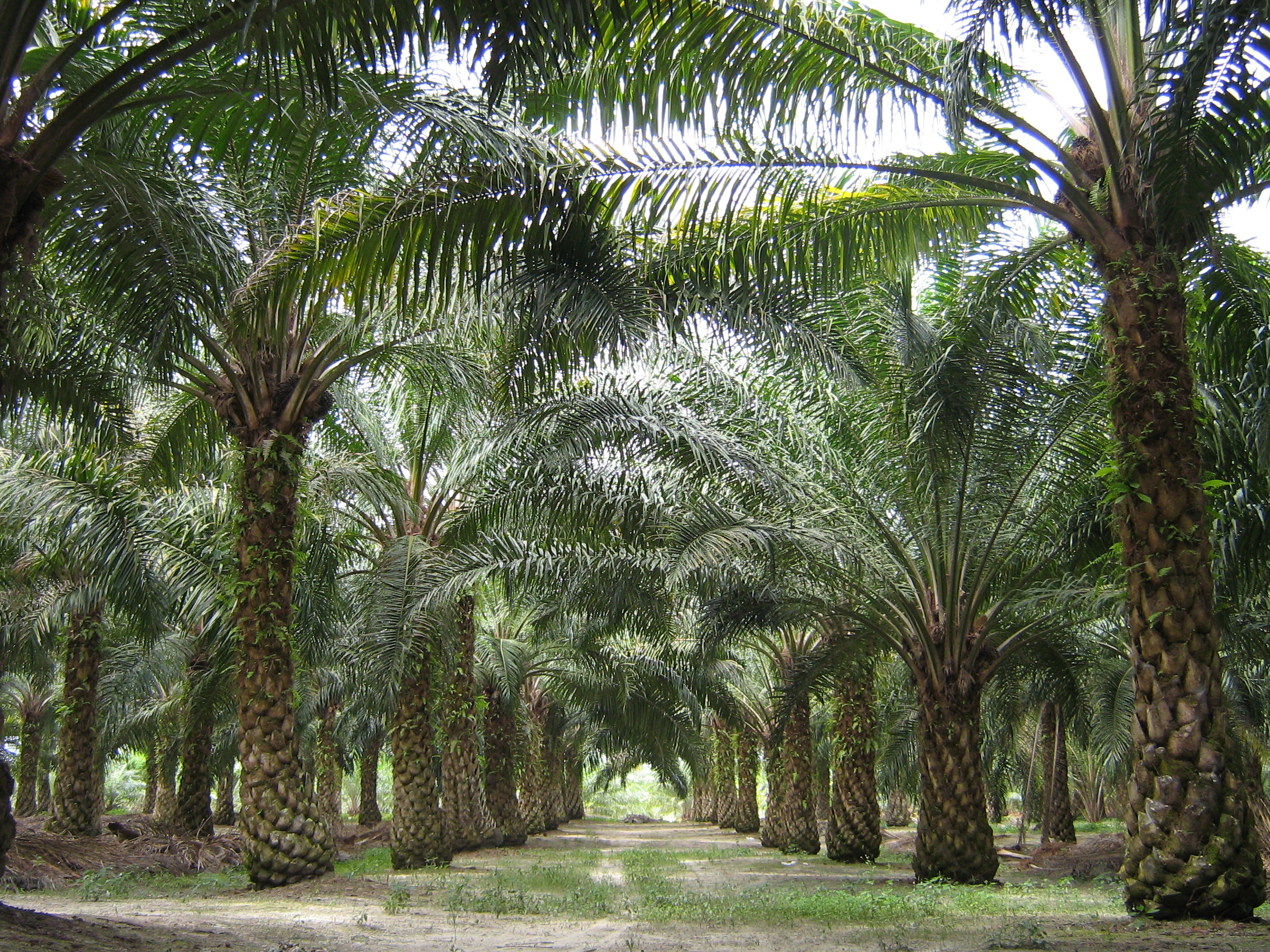
Through the city at last, and into another small city called Binjai, which feels downright attractive after Medan.  It is not long before we hit palm oil plantations.  On the left, trees about 25 years old, which is their maximum useful life span as they get too tall to easily harvest.  On the right, those about 5 years old, maybe 12 feet.  I ask how old they are at first harvest--only 2 1/2 years. It's not an unattractive tree, but with miles and miles and miles of the one crop, it's overwhelming, sinister even. Nothing grows underneath them, and animals cannot live there. Where do they go??


The roads become a pit to pit 1st gear ride. and eventually we reach Bukit Lawang, where we will hike in the Gunung Leuser park (what's left of it) the next day. The park is a shadow of it's former self, picked away by people trying to make money one way or another.

Our first Bintang, Indonesian beer, by the river which is quite high as there has been a lot of rain.  In 2003 the entire village of Bukit Lawang was wiped out when a dam burst upstream--an act attributed to illegal logging in the park. It was nighttime and people were sleeping; over 600 people lost their lives. No wonder locals are watching the river closely.


Here is (evidently) Tom's guesthouse, on the other side of the river and down a ways.  Ours is cooler looking, and much smaller.

The entire village is entirely dependent on tourism.  There are hikes and camping in the park and rafting in the river.  Below is part of the walkway from the road where cars drop tourists coming to the village.  Deliveries of supplies for the many guesthouses are made either on foot or by motorbike along this path.
.
We had an interesting, looooooong, and largely very wet hike the next day.  Here is K with Omano, our guide. This is as we crossed the river to enter the park.


Just outside the park, someone has planted rubber trees 

 and cocoa
Park entrance

On our day-long hike we saw:  Thomas' Langurs and 4 semi-wild orangutans--see pix. We were able to watch the langurs for quite awhile--cool looking!  It hadn't started to rain yet...

The orangs were a different story. The guides know them by name and know which ones can be safely observed.  The ones in this area are semi-wild, meaning they were once in captivity.  Meaning they know that humans bring food.  We did encounter two aggressive females, and were quickly shepherded out of the way by our guide and his assistant, leaving the assistant to bribe them with fruit he carried just for the purpose.  Sad!  They said if they were alone they could outrun the animals, but with us they had to protect us by distracting the orangutans with food.

Tom got the first leech :-)  It was so cozy in his armpit...  All in all we satisfied 3 leeches during the day, and frustrated one other.
Well, the main hope for the trek was to hear the sound of the group siamang vocalization, and we did come close.  Omano and his assistant tried hard to find and then follow a group of them but just as they started singing, the rain began to pour down and they stopped.  We did hear lots of white-handed gibbon vocalization, which is much simpler and no group effect. Also in the area but not seen by us are pig-tailed macaque, loris, and civet cats.

Our second encounter with an orangutan surprised the guides (and us!!).  The assistant was forced to hand over the pineapple he'd brought along for our afternoon treat.


Omano knew how much I wanted to hear the siamang, so we traversed the relatively small area of the park for hours, 7 hours total rather than the 2 - 3 planned. I enjoyed the lovely forest, and tried not to think of the hill primary forest I had hiked in 30+ years ago, not so far south of here....

Can you see the stick insect?
The end of the hike brought us to a very long, steep, muddy and downright treacherous descent to the river.  Very long--several hundred feet anyway.  I would never have made it without the steady hand of the assistant guide.  You have to wonder how many tourists they've lost down this path, which in other places (even Malaysia) would have guide ropes. Thankfully we made it.  Here we are at the bottom, waiting for a "taxi" to get us across the river
 the taxi approacheth
and off we went.
 
And on the home stretch back to Bukit Lawang and our river-side guesthouse, this lovely sight.

The next day we traveled on to Berastagi, a hill top city famous for strawberries and other temperate climate crops. The road was quite good until we hit the palm oil plantation headquarters, where processing takes place.  Here the road is made nearly impassable by truckload after overloaded truckload of the oil fruits. 
There are so many palm oil trees you get to the point where it is a relief to see a different tree of any sort.  We did see some small rubber plantations, but nothing on the scale of the palm oil. The road condition is appalling, mostly, making travel long and uncomfortable, second gear down to first, up to second down to first.  People say the government doesn't care.  In one spot two boys age 5 - 8 use a hoe and buckets to fill some potholes, while another stands in the middle of the road with a pail collecting donations for the work.  Our driver stops and searches for a coin to give the boy.

It had rained much of the previous day, and heavily all night.  We occasionally pass along the river, which is high and carries a lot of branches and bits of trees. We think anxiously of Bukit Lawang.

Nearing Berastagi the road begins a long climb. Lots of hairpin turns, speeding trucks, and gorgeous views. 
 We reach Berastagi.  In a rather dramatic contrast to the jungle guesthouse, we stay in a resort with a view (weather permitting) of one of the local volcanoes. 

The next day we set off to conquer a volcano--Mt. Sibayak. The hike begins on paved road, steep at times.  That part took us an hour and a half--T leading the pace (otherwise it would no doubt have taken K a good deal longer).  Then there are steps, or what's left of them, to clamber up, about 30 minutes' worth.  

Here is T at the foot of the volcano

And nearing the top
Our first glimpse of the volcano
See the steam vents?  We were able to walk right up to them
Want to hear it?
There's a beautiful shallow lake in the caldera

We decided to climb up to a peak to check out the view.
T at the top

Sadly there is quite a bit of trash from campers/hikers
We hiked all the way back to the hotel...  The day's damage included major sunburn and at least two funky toenails, but it was worth it!

The next day we opted for rather more tame adventure,  Another hill: Gundaling Hill, reachable by car but of course we walked :-) 
 A pleasant walk from the town, around 45 minutes.  At the top, groups of people rent a covered area to sit and relax, or take a horse cart ride around the top of the hill.
statues on the hill top


One local volcano we did not visit was Mt. Sinabung, a classic-shaped number some 20 kilometers away.  Climbing it is not advisable because A) it is really steep, and B) there is regular volcanic action.  Indeed, the day before our arrival there had been "pyroclastic activity."  No one was allowed within a 5 kilometer radius.  A man at out hotel showed us photos from the place, indicating where jungle had been a few years earlier, and a village wiped out by magma and landslides.

And finally, here are some scenes from the town of Berastagi: 

 tofu maker at the market
The bus station


The famous cabbage statue


The next day, we had a pretty scary taxi ride flying down the mountain, into, through and out of Medan to the airport and the short flight home.